Pour les demandes entreprises : (+212) 703173603
Pour les demandes particuliers : (+212) 702062126
Pour les demandes entreprises : (+212) 703173603
Pour les demandes particuliers : (+212) 702062126

The Six Sigma Training Course provides comprehensive instruction on Six Sigma methodologies and their application in process improvement and statistical analysis. Participants gain valuable insights into enhancing efficiency and minimizing defects within organizational processes.






Module 1: Introduction to Six Sigma
Understanding the fundamentals of Six Sigma methodology and its importance in process improvement.
Exploring the hierarchy of Six Sigma Belts and their roles within organizations.
Analyzing processes to identify customers, value, and sources of waste.
Introduction to key metrics used in Six Sigma for process optimization.
Module 2: Reviewing Process and Qualities
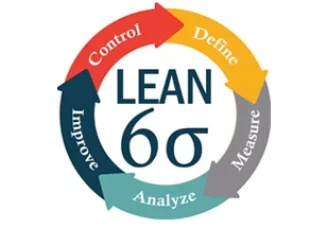
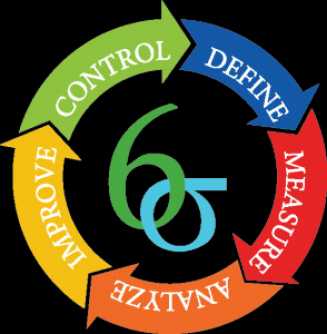
Introduction to the DMAIC methodology: Define, Measure, Analyze, Improve, Control.
Exploring each phase of DMAIC and its significance in process improvement initiatives.
Module 3: Yellow Belt Tools and Techniques
Utilizing essential tools and techniques such as Triad, Voice of the Customer (VOC), and Critical to Quality (CTQ).
Understanding process mapping through SIPOC and Value Stream Analysis.
Analyzing variation and implementing Statistical Process Control (SPC) techniques.
Identifying root causes of defects and implementing problem-solving methodologies, including Kaizen.
Module 4: Improvement Methodologies
Delving into various improvement methodologies including DMAIC, 3Cs, 8Ds, and Plan Do Check Act (PDCA).
Understanding the principles of Kaizen and Design for Six Sigma (DFSS) for continuous improvement.
Module 5: SPC Basics
Exploring Statistical Process Control (SPC) basics, including terminology, data types, and normal distribution.
Analyzing process capability and understanding its significance in process optimization.
Module 6: Risk Management
Introduction to Green Belt Risk Management and Failure Mode and Effects Analysis (FMEA) for risk mitigation.
Module 7: DMAIC for Green Belts
In-depth exploration of DMAIC phases specifically tailored for Green Belts.
Module 8: SPC Tools and Techniques
Utilizing various SPC tools and techniques including frequency distribution tables, Pareto charts, and control charts for process monitoring and improvement.
Module 9: Analyze Phase
Conducting process analysis through process mapping, Value Stream Maps (VSM), and identifying improvement opportunities.
Module 10: Improve Phase
Implementing improvement solutions identified through Heijunka and standardization processes.
Module 11: Control Phase
Ensuring sustainability of improvements through embedding changes, measuring gains, and closing projects effectively.