Pour les demandes entreprises : (+212) 703173603
Pour les demandes particuliers : (+212) 702062126
Pour les demandes entreprises : (+212) 703173603
Pour les demandes particuliers : (+212) 702062126

The Lean Six Sigma® Yellow Belt training equips participants with the foundational knowledge and skills required to actively contribute to improvement projects within an organization. This training provides an operational understanding of Lean Six Sigma® methodologies, empowering individuals to participate effectively as members of project teams.






Module 1: Foundations of Lean Six Sigma®
Historical Evolution of Lean Six Sigma®: Understanding the origins and evolution of Lean Six Sigma® methodology.
Complementarity of Lean and Six Sigma®: Exploring how Lean and Six Sigma® methodologies complement each other in process improvement.
Understanding Processes: Defining what constitutes a process and introducing the concept of Six Sigma® measurement.
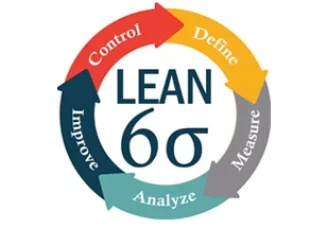
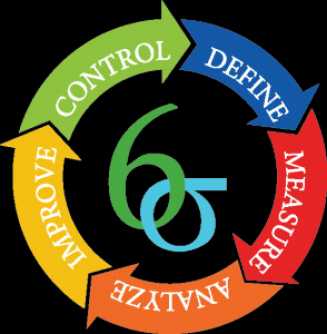
DMAIC Methodology: Introduction to DMAIC (Define, Measure, Analyze, Improve, Control) as the structured approach for process improvement.
Quality Concepts: Defining quality and examining the Cost of Poor Quality (COPQ).
Lean Management and Waste Reduction: Exploring Lean Management principles and techniques for waste elimination such as Muda, Muri, Mura, and Lead Time.
Discussion: Engaging in discussions on enterprise processes, focusing on efficiency versus effectiveness.
Module 2: Project Definition in Lean Six Sigma®
Introduction to Define Phase of DMAIC: Understanding the key steps involved in the Define phase.
Developing a Business Case: Learning to articulate the business case for a process improvement project.
Problem vs. Cause Differentiation: Distinguishing between problems and root causes.
Project Objectives: Setting project objectives using various perspectives: Voice of Process (VOP), Voice of Customer (VOC), and Voice of Business (VOB).
Project Organization: Understanding project organization, roles, and the specific role of a Yellow Belt.
Exercise: Practicing problem identification to define the business case for an improvement project.
Module 3: Process Measurement
Introduction to Measure Phase of DMAIC: Overview of the Measure phase objectives.
SIPOC Method: Defining the process using the Supplier-Input-Process-Output-Customer (SIPOC) method.
Process Mapping: Visual representation of a process through process mapping techniques.
Descriptive Statistics Essentials: Basic understanding of descriptive statistics and graphical representations.
Measurement System Analysis (MSA): Evaluating the variation sources through MSA.
Process Capability: Calculating process capability metrics such as Defects Per Unit (DPU) and Defects Per Million Opportunities (DPMO).
Exercise: Performing process capability analysis.
Module 4: Process Control and Continuous Improvement
Introduction to Control Phase of DMAIC: Understanding the objectives of the Control phase.
Root Cause Analysis: Utilizing tools like Ishikawa diagrams and X-Y matrices for root cause identification.
Correlation vs. Causality: Differentiating between correlation and causality in problem-solving.
Failure Mode and Effects Analysis (FMEA): Applying FMEA method in the Control phase.
Lean Tools for Continuous Improvement: Leveraging Lean tools like Value Stream Mapping and 5S for continuous improvement.
Control Charts: Monitoring process performance using control charts.
Improvement Measurement: Evaluating improvement through direct and indirect gains, yields, and Return on Investment (ROI).
Exercise: Applying X-Y matrix for root cause analysis.
Module 5: Certification Preparation
Review and Instructions: Recap of certification requirements and examiner's instructions.
Exam Preparation Tips: Providing guidance and tips for preparing for the certification exam.